
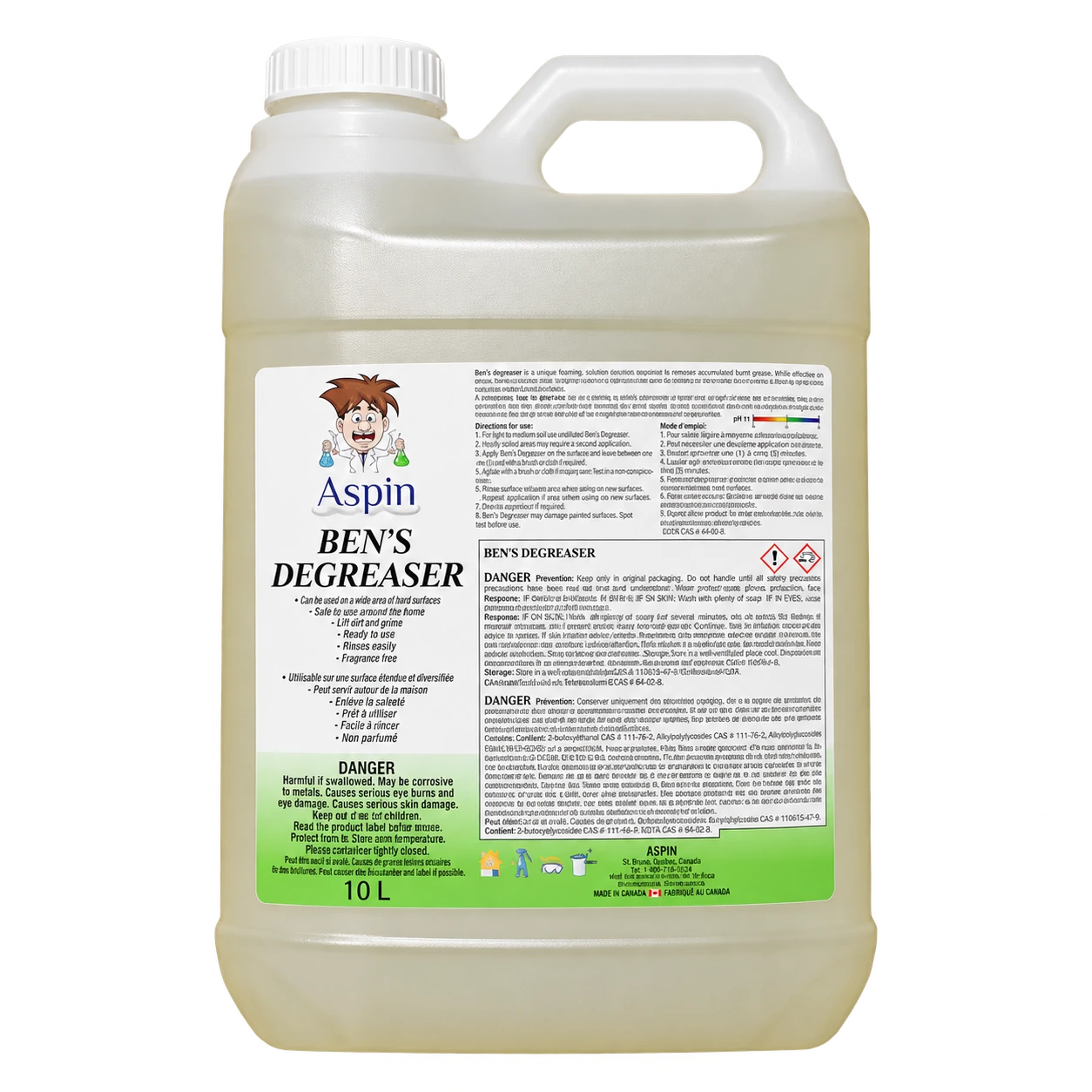
Detergent and rinse additive belong to different parts of the warewashing process. Treating them as interchangeable creates confusion during ordering, container changes and troubleshooting. Start by naming the job each product performs.
The wash stage
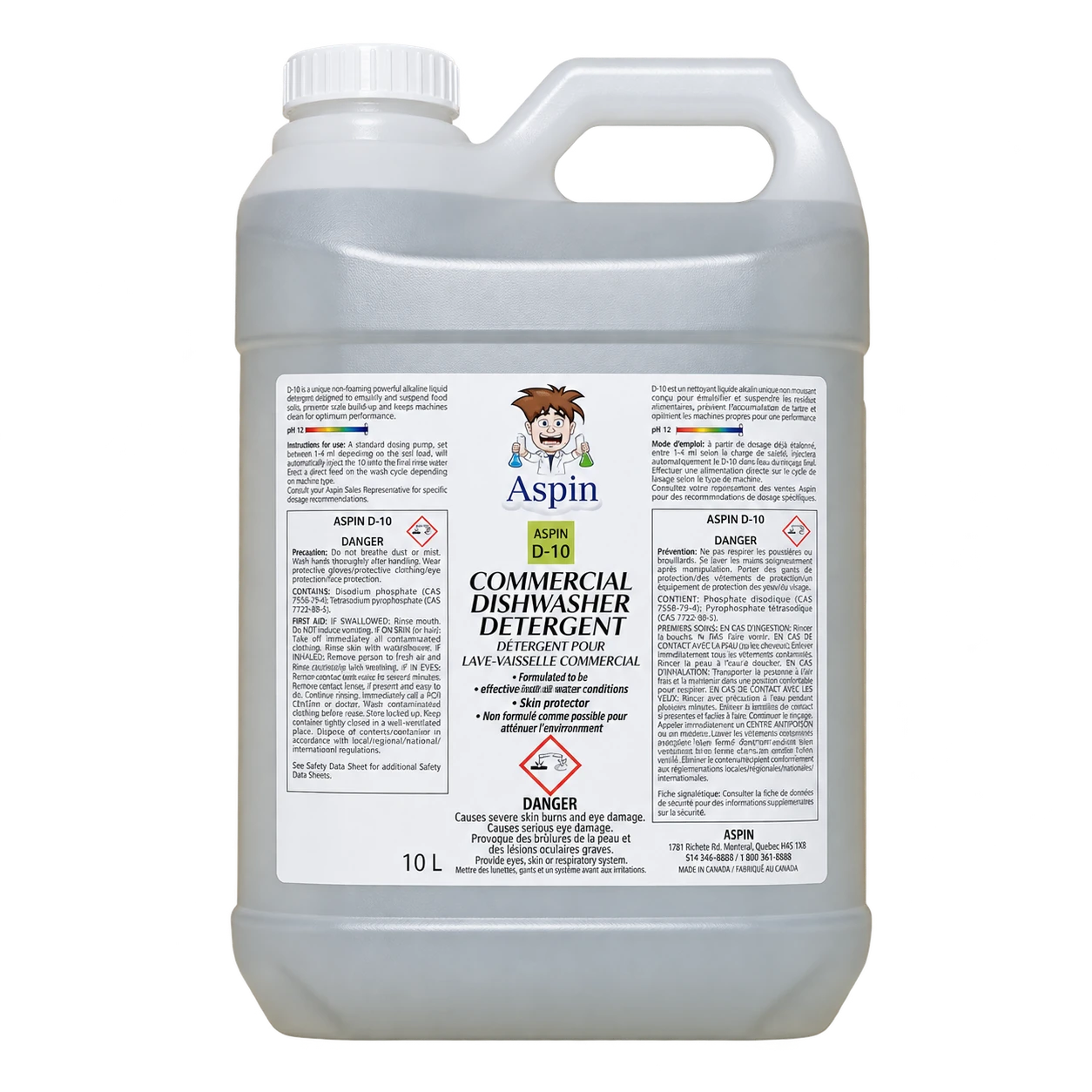
Commercial dishwasher detergent supports the removal of food soil during washing. For Aspin’s range, that role belongs to D-10, a concentrated non-foaming alkaline detergent. The product needs to be used through the equipment’s intended detergent system and according to the current instructions.
When a plate still carries food residue, record the type and position of that residue. The answer may involve preparation, loading or equipment condition as well as detergent delivery. Looking only at the chemical container can miss the rest of the process.
The rinse and drying stage
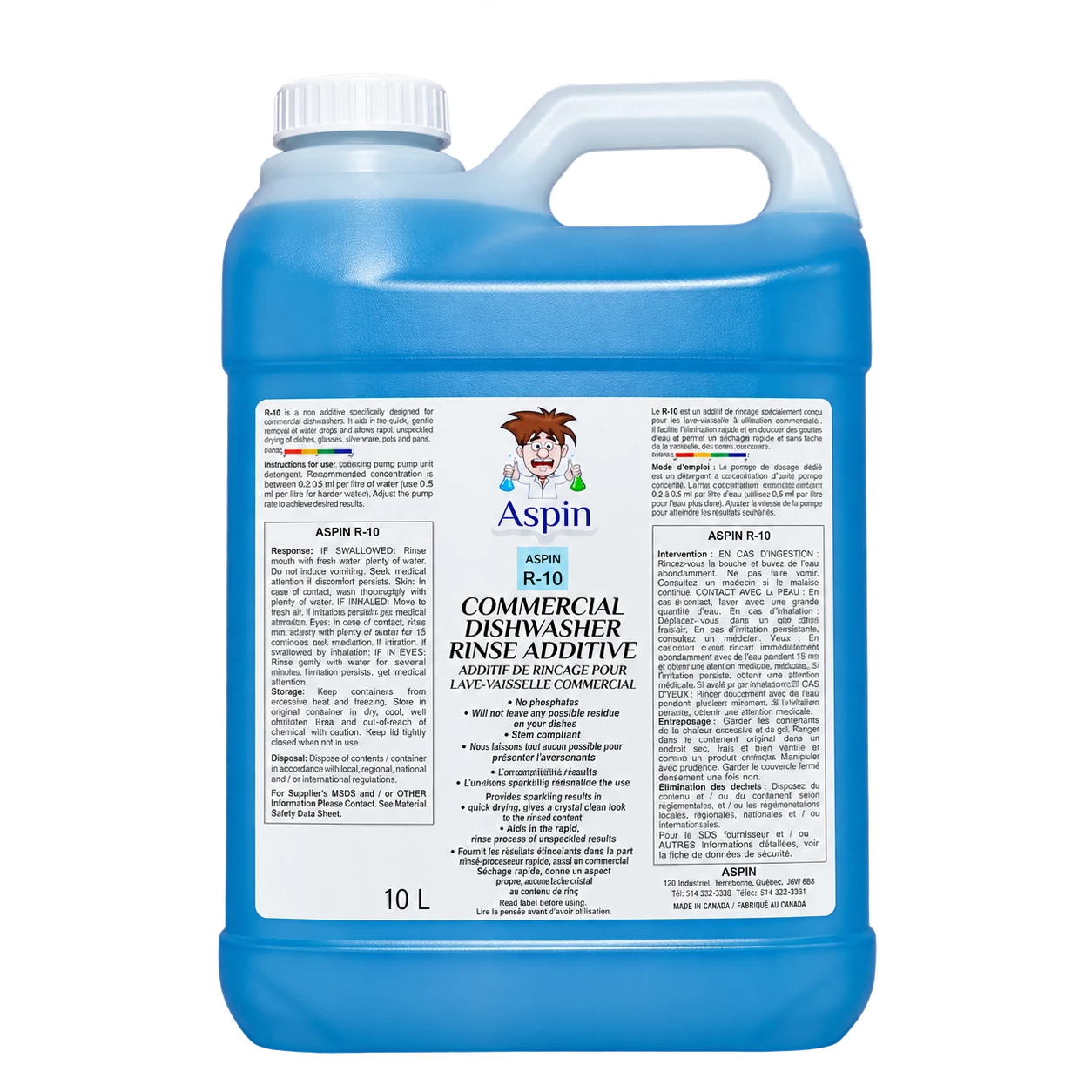
R-10 is Aspin’s rinse additive. Its stated purpose is to support drying and help reduce droplets for a clear finish. It belongs in the rinse-additive system specified for the machine.
A drying complaint does not mean more detergent is needed. Likewise, adding rinse additive is not a substitute for correcting a wash problem. Staff should describe what they see rather than decide which pump to increase.
Keep sanitizing separate in the conversation
Neither a detergent description nor a rinse-aid description establishes that a product performs the required sanitizing step. Confirm the machine’s sanitizing process from its documentation and your operation’s procedures. Do not infer that role from a clean appearance.
Make container changes unmistakable
Create an equipment sheet with the product name, purpose, container location and the person authorised to change supply. Use written identification; bottle colour alone is a weak control because packaging can change.
For example, a closing employee should be able to report “the R-10 supply container is low” without calling both products “soap.” That small distinction improves purchasing and makes a service call easier to interpret.
Before a supplier change, confirm each line with a qualified service provider. Keep both English and French safety data sheets available where the team can find them.