
“Cloudy glasses” can mean an overall haze, isolated marks or an appearance that remains after repeated washing. Before a team changes products, define the symptom and compare like-for-like glassware. Not every visual defect has the same explanation.
Sort the affected glassware
Separate observations by glass type, age where known and usual use. A new delivery of glasses should not be treated as identical to an older mixed collection. Check the glass manufacturer’s care instructions and suitability for the installed dishwasher.
Record whether the appearance is present on incoming stock or appears after a particular process. If a glass is damaged or its suitability is uncertain, use the site’s removal-from-service procedure rather than experimenting to restore it.
Describe when the haze becomes visible
Inspect under consistent lighting after the normal process is complete. Note whether the appearance changes during drying, storage or subsequent handling. Do not use a shine or clarity test as evidence that sanitizing requirements have been met.
A practical record includes:
- Glass type and identifiable batch or purchase date.
- Rack and machine used.
- Typical beverage or soil exposure.
- First observed date and affected quantity.
- Relevant cleaning, supply or equipment changes.
- Photographs taken from consistent angles.
Avoid a trial-and-error chemical response
Do not assume a stronger detergent or an acidic treatment is appropriate. A supplier or equipment specialist may need to distinguish removable deposits from a changed or damaged surface. The glass manufacturer’s advice is also relevant when compatibility is uncertain.
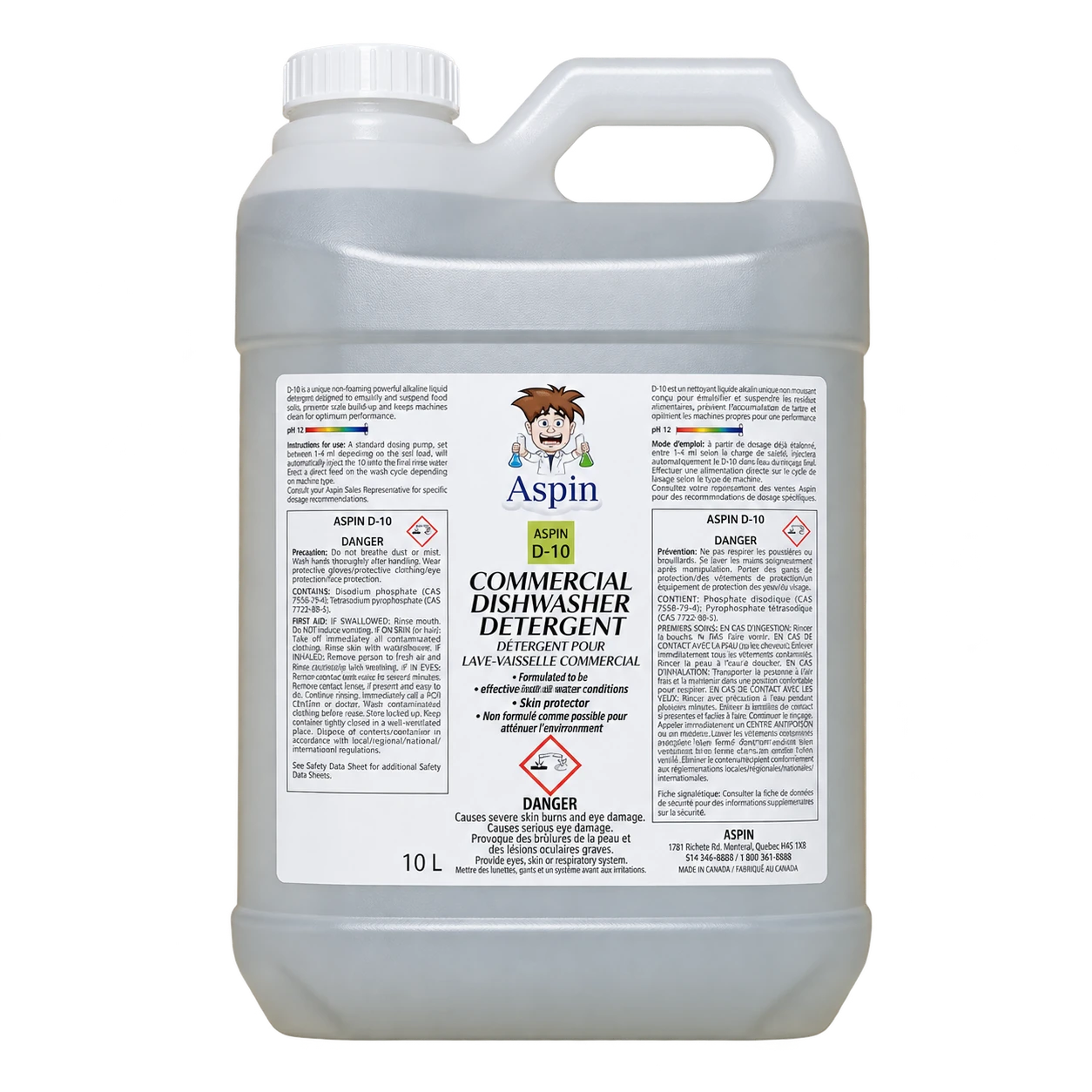
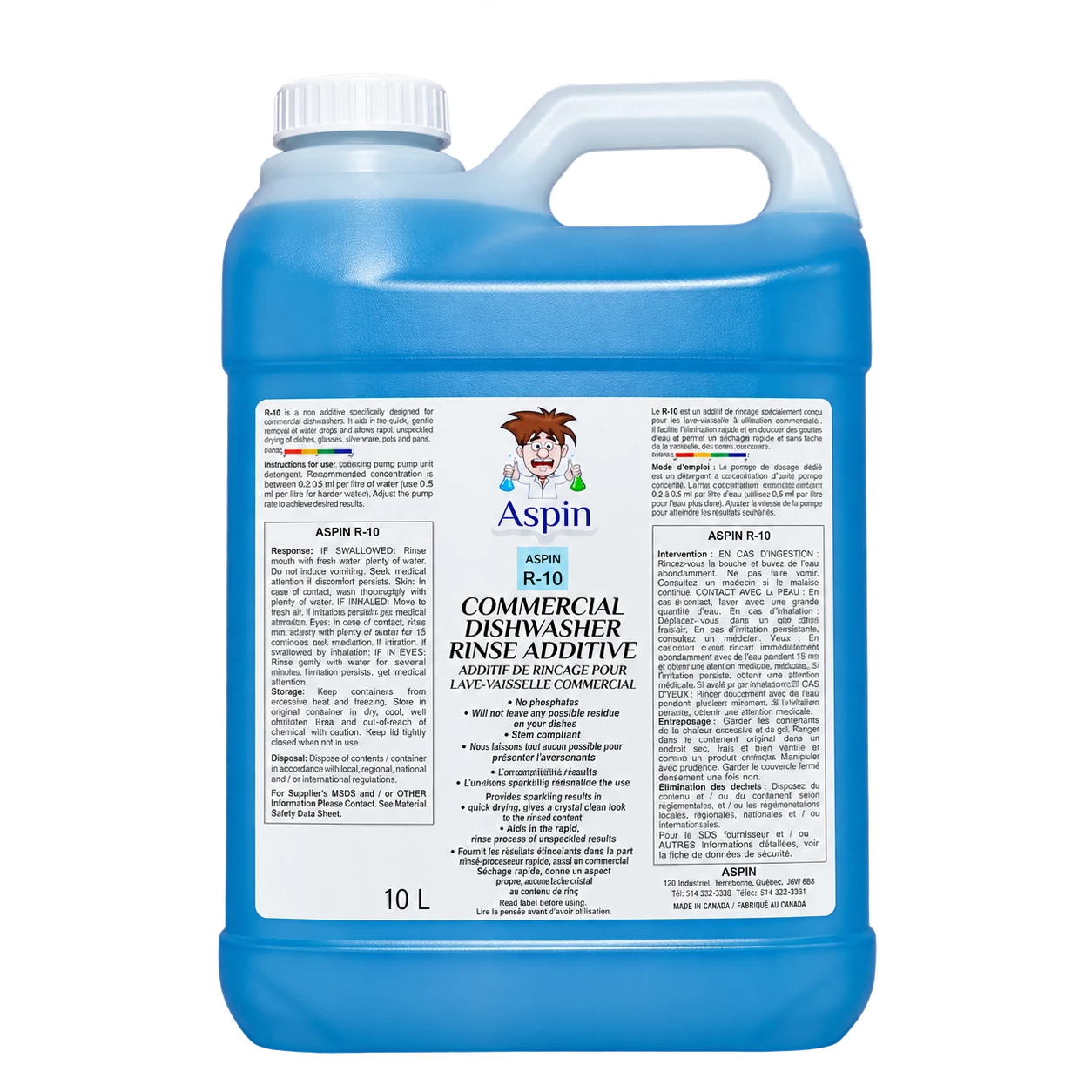
Keep product names clear during the discussion. D-10 detergent and R-10 rinse additive perform different jobs. Report which products are in use and how the equipment is serviced, without adjusting either system independently.
Track the follow-up
After an approved intervention, compare the same kind of glass under the original observation conditions. Keep older affected pieces separate from new stock in the record so an existing appearance is not confused with a new process failure.
For individual spots rather than overall haze, use the water-spot investigation guide. Send the record to Aspin when asking for product or service advice.