
A drying area is part of the dishwashing system. When clean landing space fills, employees may rush handling or move racks repeatedly. Plan the space around the actual flow of ware and the site’s required drying and storage procedures.
Map the clean-side journey
Follow a completed rack from the machine to its storage location. Count the transfers and identify where staff need to reach, turn or carry items across another task. Keep the site’s separation between dirty and clean work visible throughout that journey.
Do not define the area only by how many racks fit on a bench. Include access for unloading, the position of clean storage and the frequency with which another employee collects finished ware.
Observe the busiest return period
Watch a representative rush and note when space becomes constrained. Record whether the queue consists of glasses, cups, plates or mixed racks. Different ware shapes and handling arrangements can create different space demands.
Useful questions include:
- Does clean storage fill before the landing area does?
- Are staff waiting for an appropriate rack position?
- Are items transferred before the approved drying process is complete?
- Can a collection schedule prevent unnecessary accumulation?
- Is temporary event ware changing the usual workflow?
Keep the process consistent
Follow the machine and ware manufacturer’s instructions and the operation’s hygiene procedures. Do not invent a universal drying time or stack items early simply to free space. The team needs a clear, site-specific standard for when ware is ready to move.
For example, a café may solve a recurring cup queue by assigning regular collection of ready racks. That decision should be checked against the full process, including storage capacity and handling responsibility, rather than assessed only by how quickly the bench clears.
Review the equipment and product roles
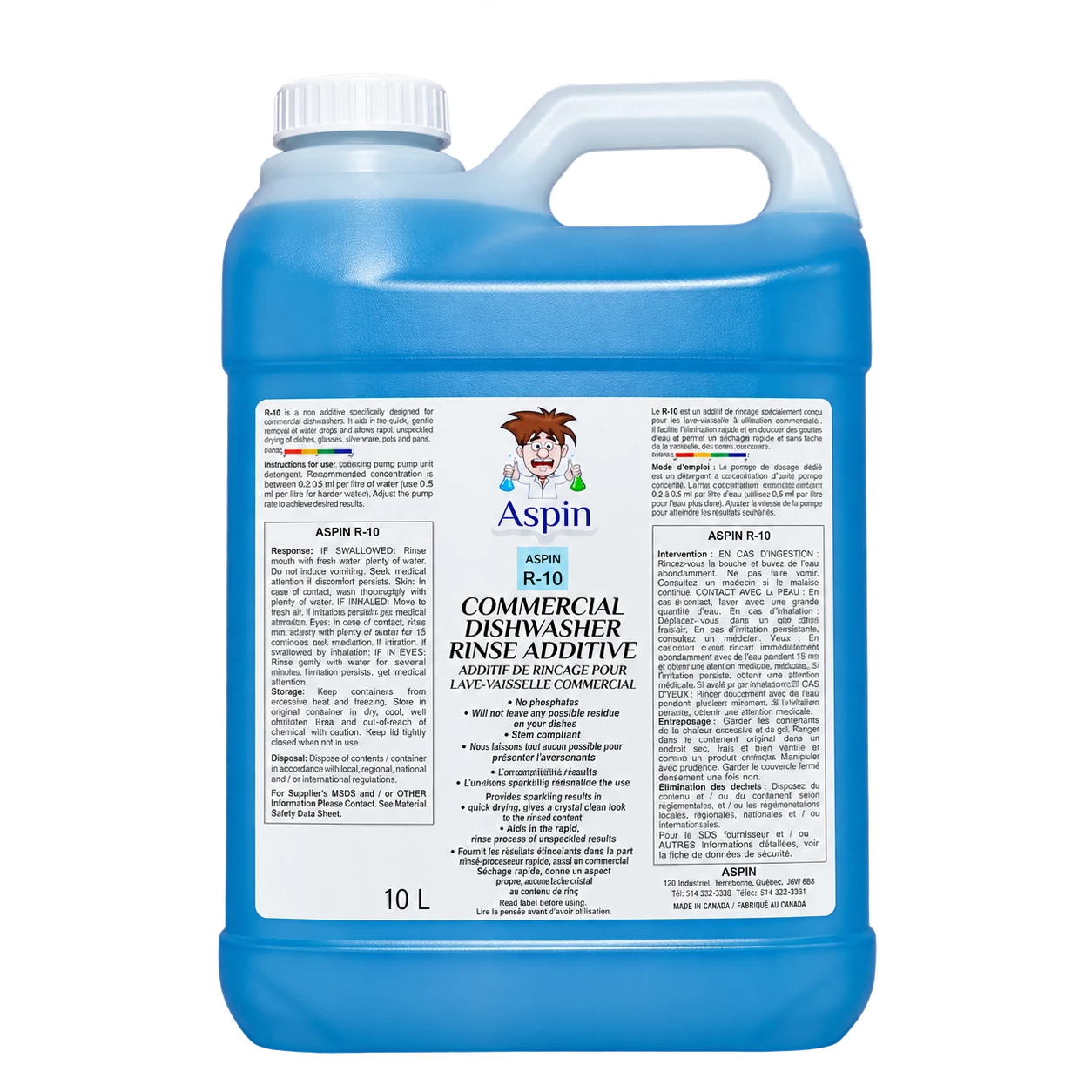
If drying concerns persist even with an organised clean side, record the ware type and conditions for the service provider. R-10 supports the rinse and drying stage, but it is not a replacement for appropriate equipment operation or space planning.
Use peak dishwashing demand to evaluate the wider station and contact Aspin for equipment or product enquiries.