
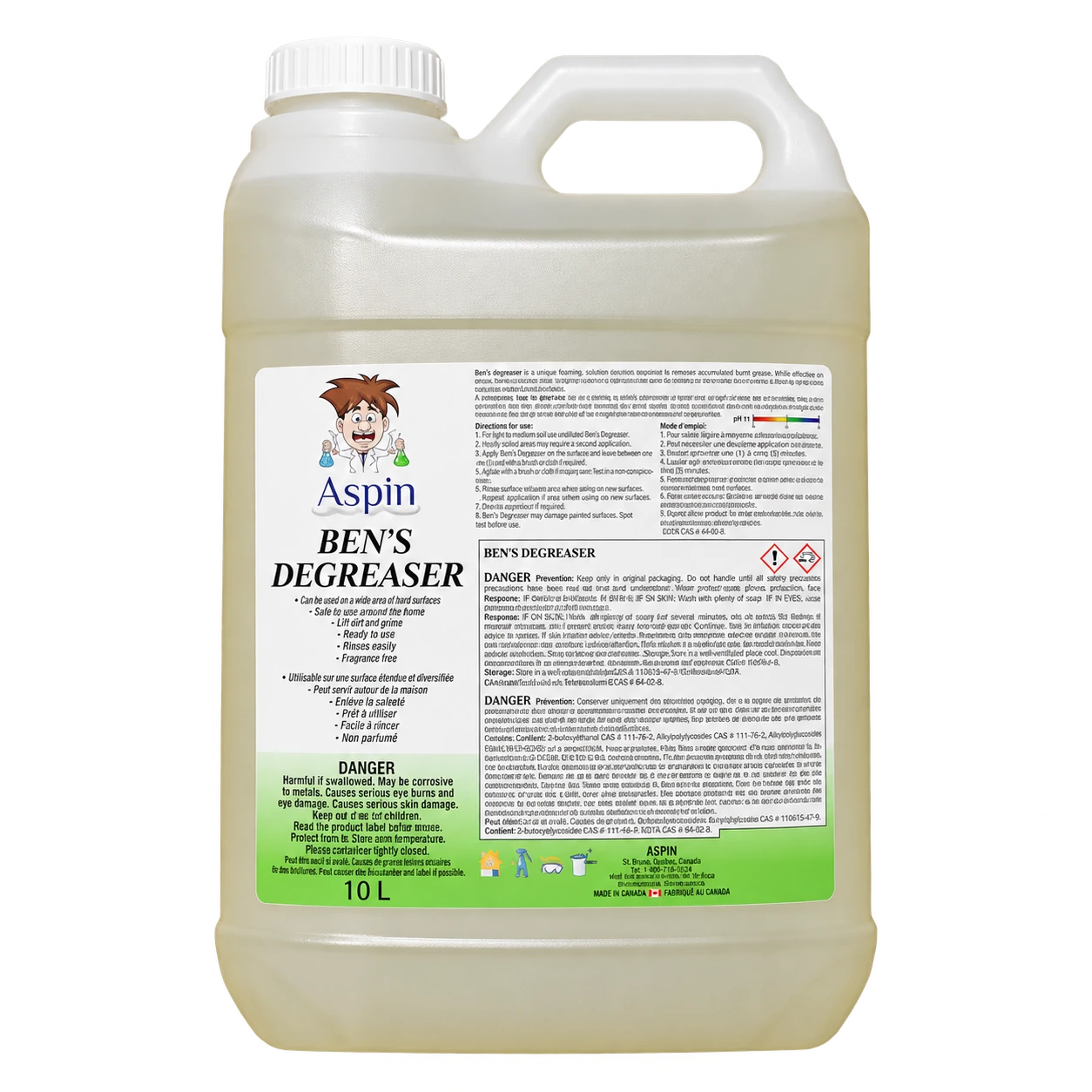
Choosing detergent starts with the machine and the work it performs. A product description alone cannot tell you whether the dispensing setup, ware and operating conditions are a good match. Build a short equipment profile before requesting a recommendation.
Record the machine, not just the brand
Write down the make, model and serial number from the identification plate. Note whether the site uses a separate glasswasher, an undercounter machine or a larger rack system. Photograph the existing chemical containers and their labelled connections without disconnecting anything.
Also list what passes through the machine. A café washing mainly cups faces a different soil pattern from a restaurant handling greasy plates, utensils and cookware. The distinction helps your supplier discuss the task rather than offer an assumption based on business type.
Ask about the whole dispensing arrangement
A compatible detergent still needs the correct feed arrangement. Ask who will confirm the product connection, check dispensing and document the approved settings. Avoid adopting a dose from a different kitchen or adjusting a pump because a container seems to empty slowly.
- Confirm the proposed product’s intended machine application.
- Ask how detergent and rinse-additive lines will remain clearly identified.
- Request the current container instructions and safety data sheet.
- Agree how performance will be checked after the change.
Evaluate a normal shift
Record rack volume, the types of ware, visible soil after washing and any rewash work. Include quieter periods and the busiest service window. A few good racks at opening do not establish how the process behaves after sustained use.
Keep other changes limited during the evaluation. If staff change loading, detergent and pre-scraping together, it becomes difficult to identify what improved the result. Record necessary process corrections, then compare similar operating periods.
Make the handover usable
Keep the recommendation, product identity and service contact beside the equipment record. Staff need a clear route for reporting a problem, not permission to experiment with concentration.
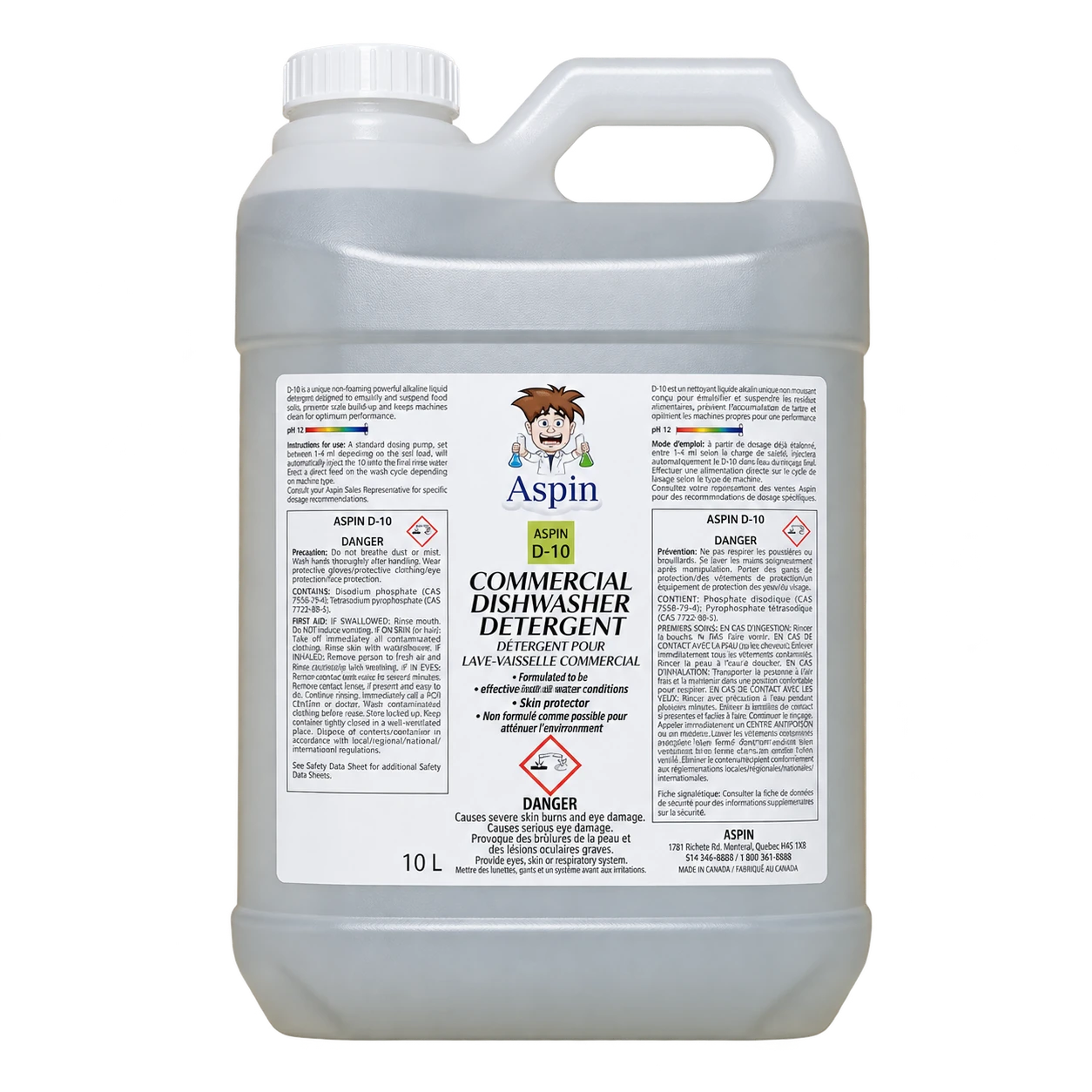
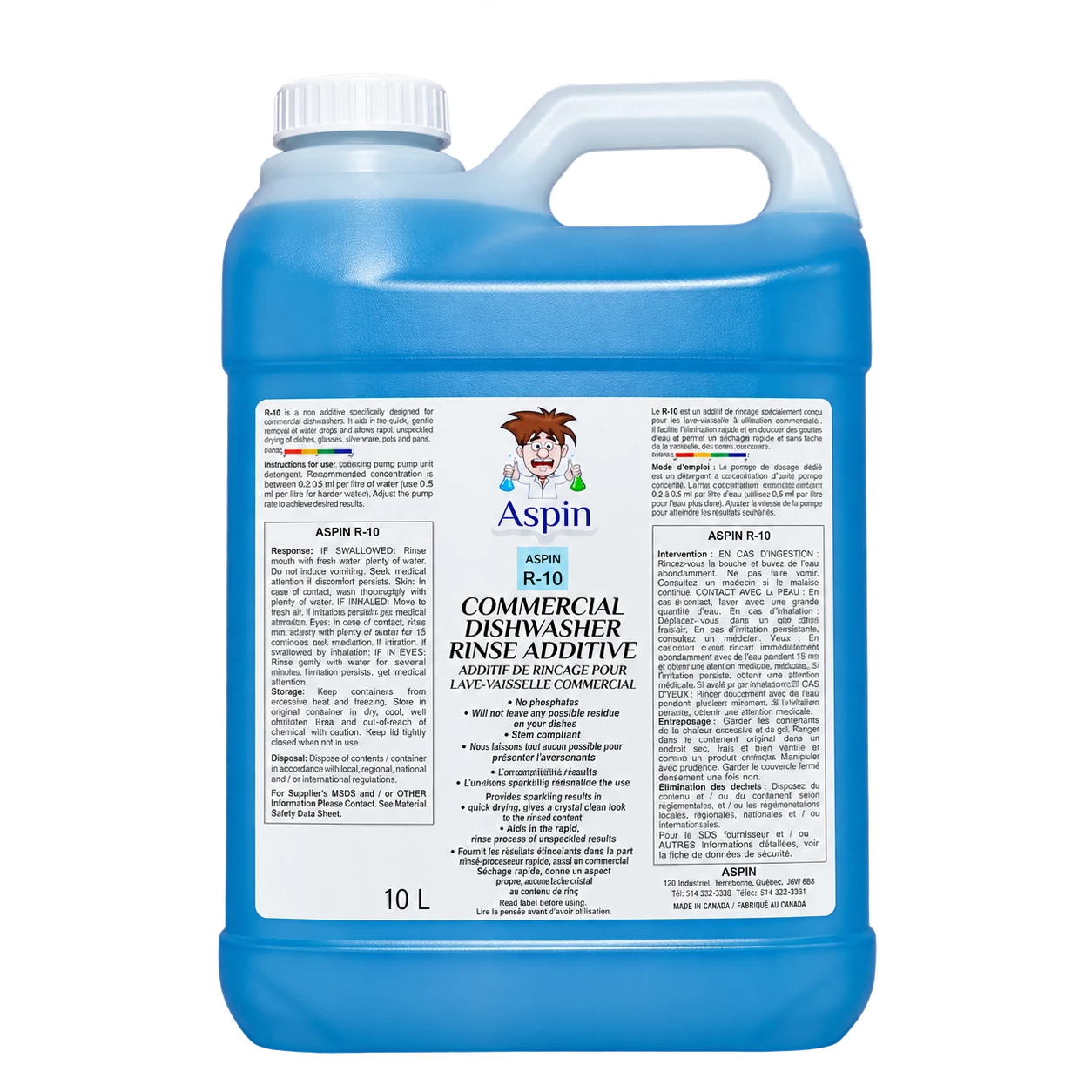
Aspin D-10 is a non-foaming commercial dishwasher detergent. For the separate rinse stage, review R-10. Send the equipment profile to Aspin’s service team to discuss your setup.