
Cleaning discussions become easier when everyone uses the same words for the same function. This glossary explains common terms in the context of purchasing and daily operations. The actual product label and equipment instructions remain the source for how a particular product is used.
Product roles
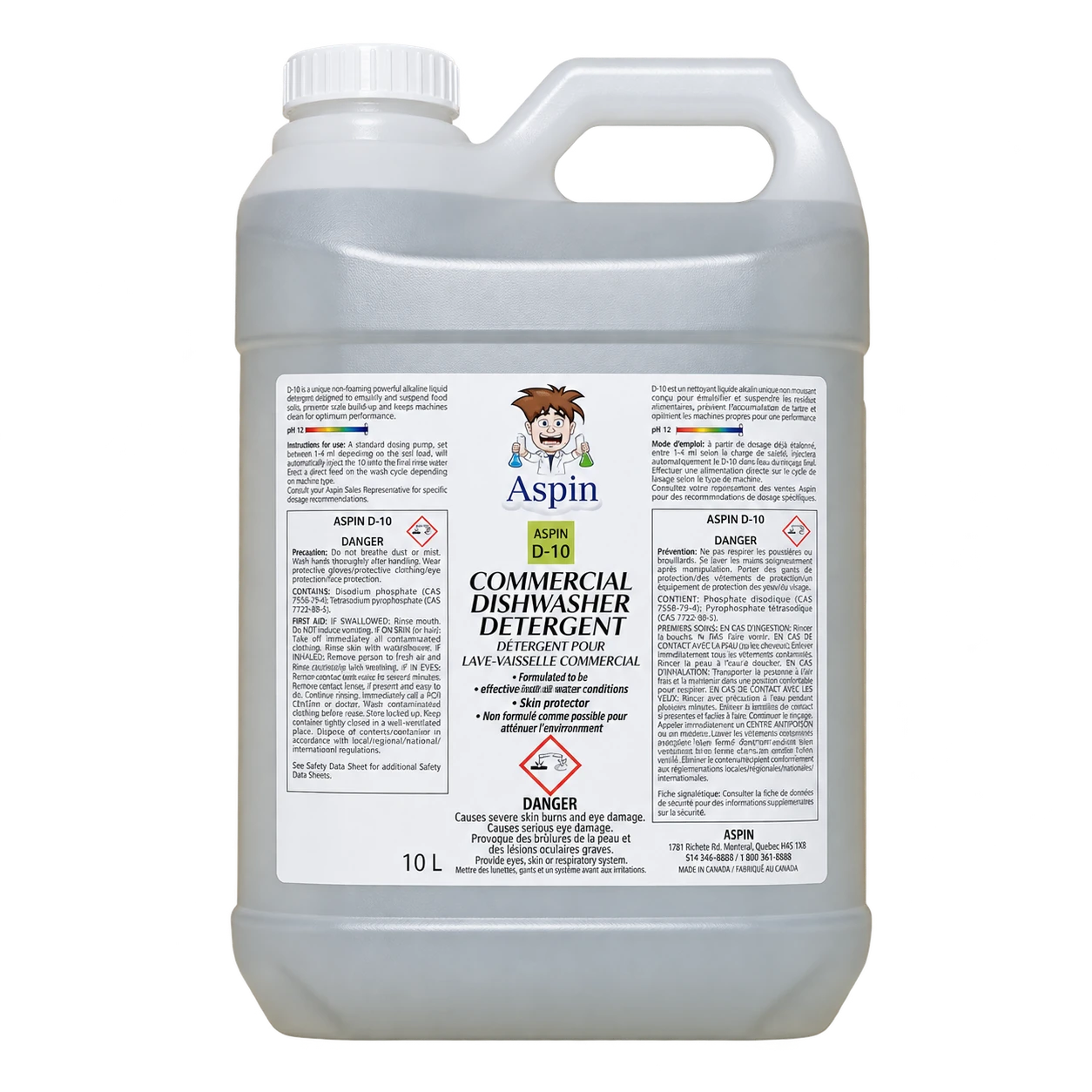
Detergent: A cleaning product intended to remove soil in its specified application. A commercial dishwasher detergent belongs to the machine's washing process; it should not be confused with a product intended for washing dishes by hand.
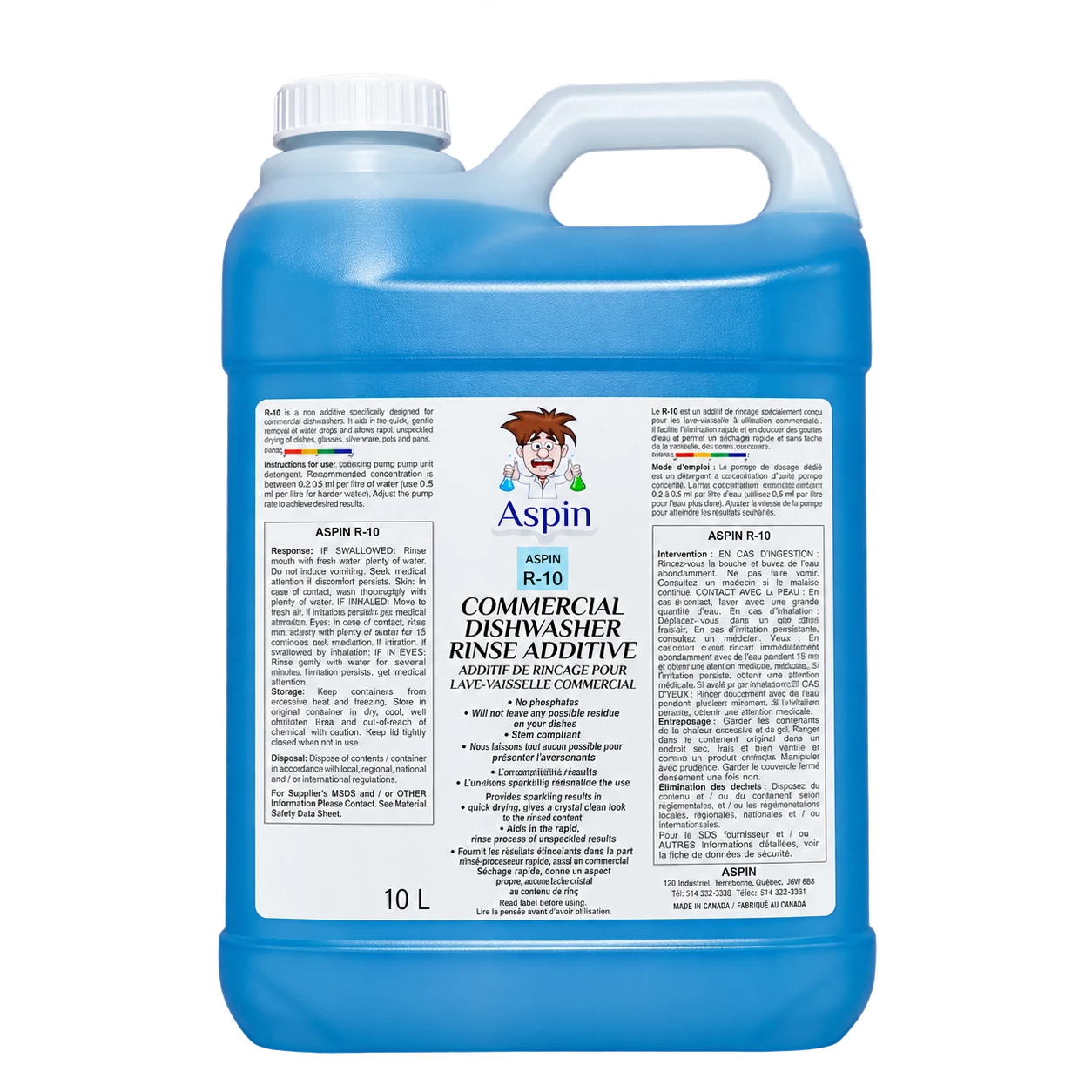
Rinse additive: A product used in the appropriate rinse-additive system to support the finishing stage, including water drainage and drying performance. R-10 is Aspin's product in this category.
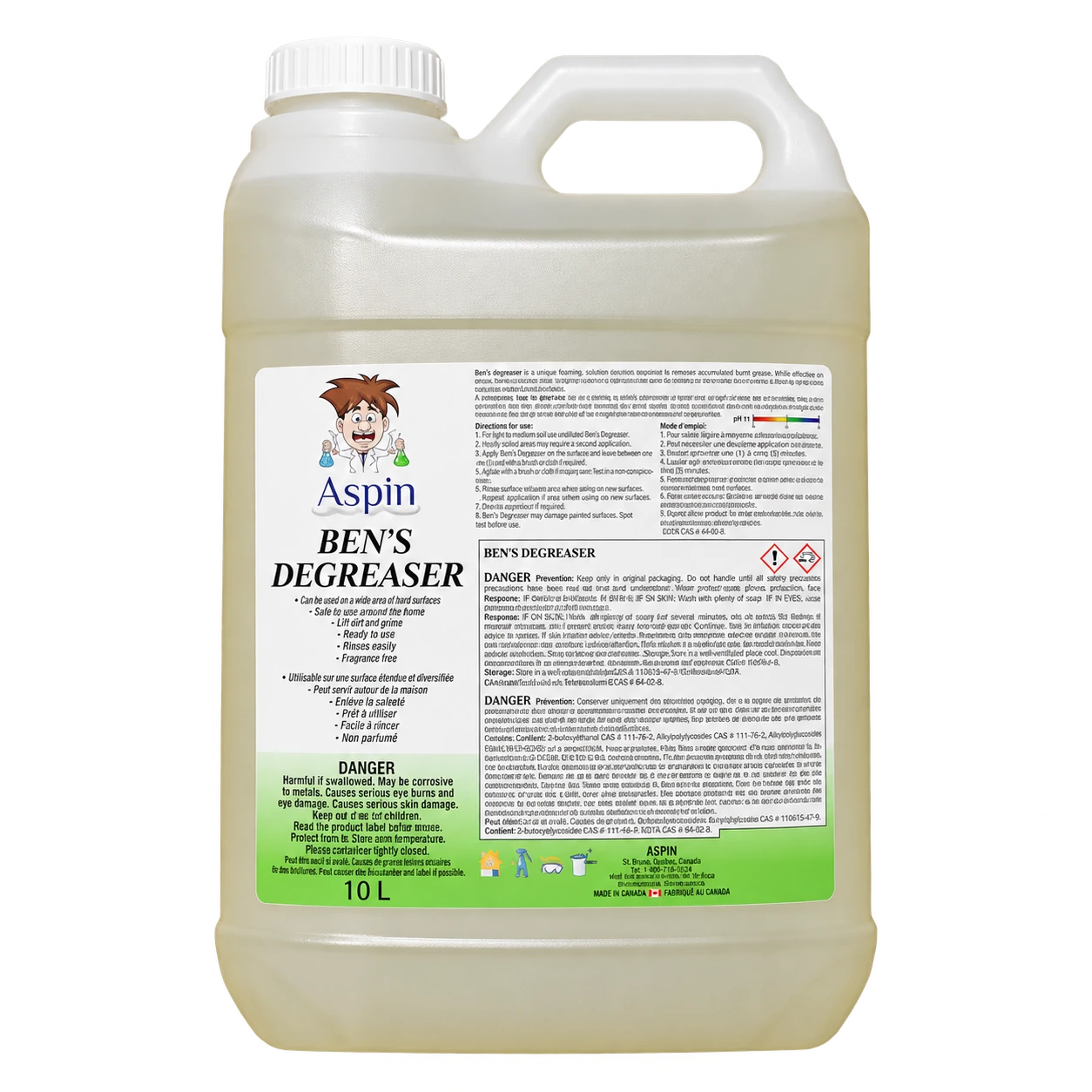
Degreaser: A cleaner intended for grease-related tasks within its specified limits. The word does not establish compatibility with every metal, coating or surface. Ben's Degreaser and routine surface care have different intended roles.
Formats and records
Concentrate: A product supplied in a form that requires use according to its specified preparation or dispensing directions. The correct arrangement varies by product; “concentrated” is not a universal mixing instruction.
Ready to use: A format intended to be applied as supplied according to its label. It still has application limits and handling requirements.
SDS: A safety data sheet providing product hazard and safety information. It supports workplace assessment and handling but is not necessarily a complete cleaning task procedure. See labels and SDS.
Performance and purchasing
Rewash: Ware sent through another wash because the first outcome was not accepted. A useful record includes the reason observed and the total rack count for context.
Cost per rack: A defined cost total divided by racks processed over the same period. State which costs are included before comparing figures.
Compatibility: Whether a product and method are appropriate for the specific material, finish and equipment under the intended conditions. Confirm it from relevant instructions or qualified guidance rather than appearance alone.
When a supplier uses an unfamiliar term, ask what it means for your actual task. A precise question is more useful than agreeing to a specification that different people interpret differently.