
Plastic cups, trays and containers should be assessed as their own group in a commercial dishwashing routine. Comparing their appearance with unrelated glassware can hide important differences in item design, loading and manufacturer instructions.
Confirm what the item permits
Start with the ware manufacturer’s dishwasher and care guidance. “Plastic” covers many products, and appearance alone does not establish compatibility with a particular commercial machine. Identify lids, seals and separate components as well as the main container.
Keep the product identification with the purchasing record. If the supplier cannot confirm suitability for the intended process, raise that question before introducing the items into regular service.
Check how the item is loaded
Follow the rack and equipment instructions for orientation and support. Record where water appears to remain: inside a cup, around a rim, in a recessed base or beneath another item. That description is more useful than a general statement that “plastic never dries.”
Do not exceed rack limits or improvise restraints that the manufacturer has not approved. An unfamiliar item may require a different rack or a separate handling arrangement.
Compare similar samples
Choose several items of the same design and observe them through the normal process. Record the rack type, position and operating period. Keep the site’s drying and clean-storage procedures unchanged during the comparison.
A short worksheet can include:
- Item brand or product code.
- Manufacturer’s permitted cleaning method.
- Rack and orientation used.
- Location of retained water or visible marks.
- Any damaged, distorted or unusually worn items.
Use the findings for a practical decision
The result may inform a rack discussion, a storage change or the next purchasing specification. It should not lead automatically to a stronger chemical dose. Ask the responsible service provider to assess any proposed dispensing adjustment.
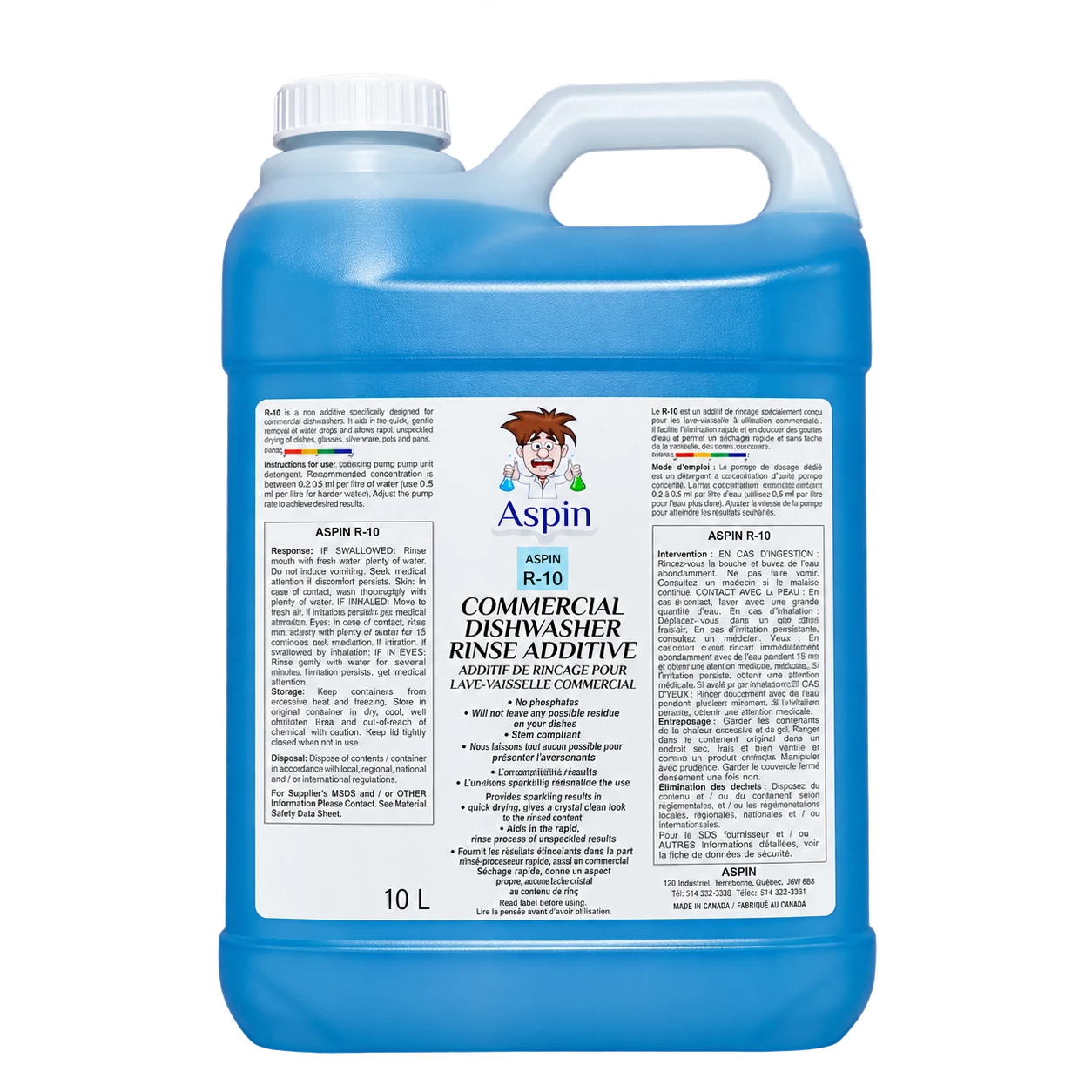
R-10 rinse additive has a specific role in commercial dishwashing. Review drying-area planning alongside the product information so a chemical discussion does not overlook the handling and storage stages.