
Water spots are a symptom to investigate, not a diagnosis by themselves. The same complaint can describe different appearances on glass, cutlery or plates. A useful first step is to document exactly what the team sees and when it appears.
Make the complaint specific
Examine comparable items under consistent lighting. Note whether marks appear immediately after unloading, after drying or only after storage. Record whether all ware is affected or whether the issue is limited to a particular glass, rack or service period.
Avoid testing unknown residues by tasting them or applying an improvised chemical. Keep rejected ware within the site’s established rework process while the cause is investigated.
Compare a small set of observations
Use the same rack type and loading arrangement for the comparison. Changing the load and chemical settings simultaneously makes the result hard to interpret. Record the machine identification and any displayed warning alongside the observations.
- What does the mark look like: a ring, streak, haze or isolated spot?
- Which ware materials and positions are affected?
- Did a chemical container, rack or water system recently change?
- Is the complaint present throughout the shift or only at peak demand?
- Are there associated wash or drying complaints?
Bring evidence to the service conversation
A photograph of several representative items is more useful than one dramatic close-up. Include a clean comparison item when possible and explain the lighting. Photos help describe the issue but do not establish chemical identity or equipment condition.
Ask the service provider to review the relevant machine, water and dispensing factors. Do not compensate by increasing rinse additive independently. An adjustment should have a documented purpose and a follow-up check.
Check the result after intervention
Repeat the original observation method after the service work or approved process change. Keep the rack mix and operating period comparable, and note what changed. If the symptom remains, the record prevents repeating the same unsuccessful intervention without context.
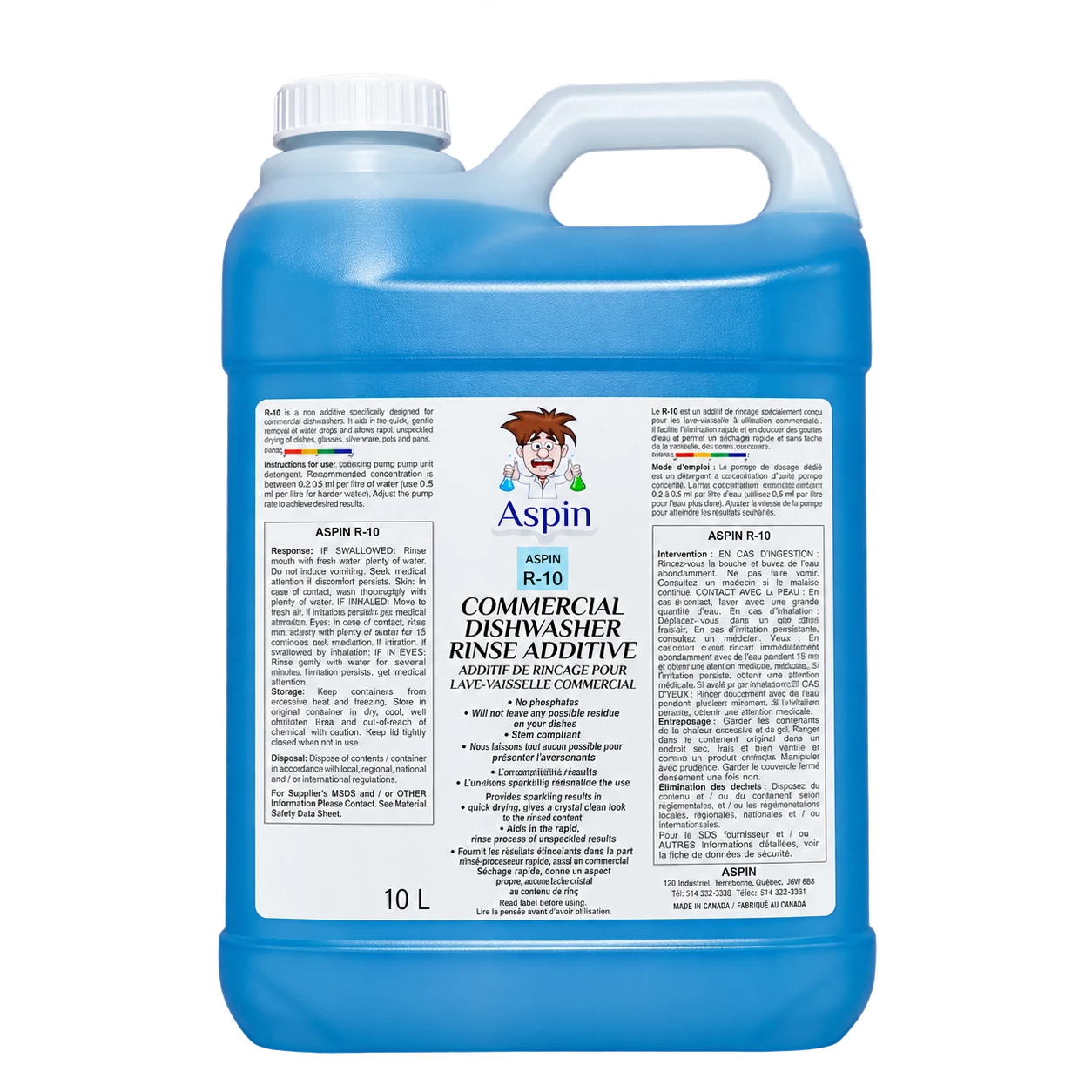
R-10 is Aspin’s commercial dishwasher rinse additive. For a different appearance, see cloudy glassware or contact Aspin with your machine and product details.